From separate websites to one unified digital gateway
How Ecura consolidated structure, technology, and content into a single solution to support future growth.
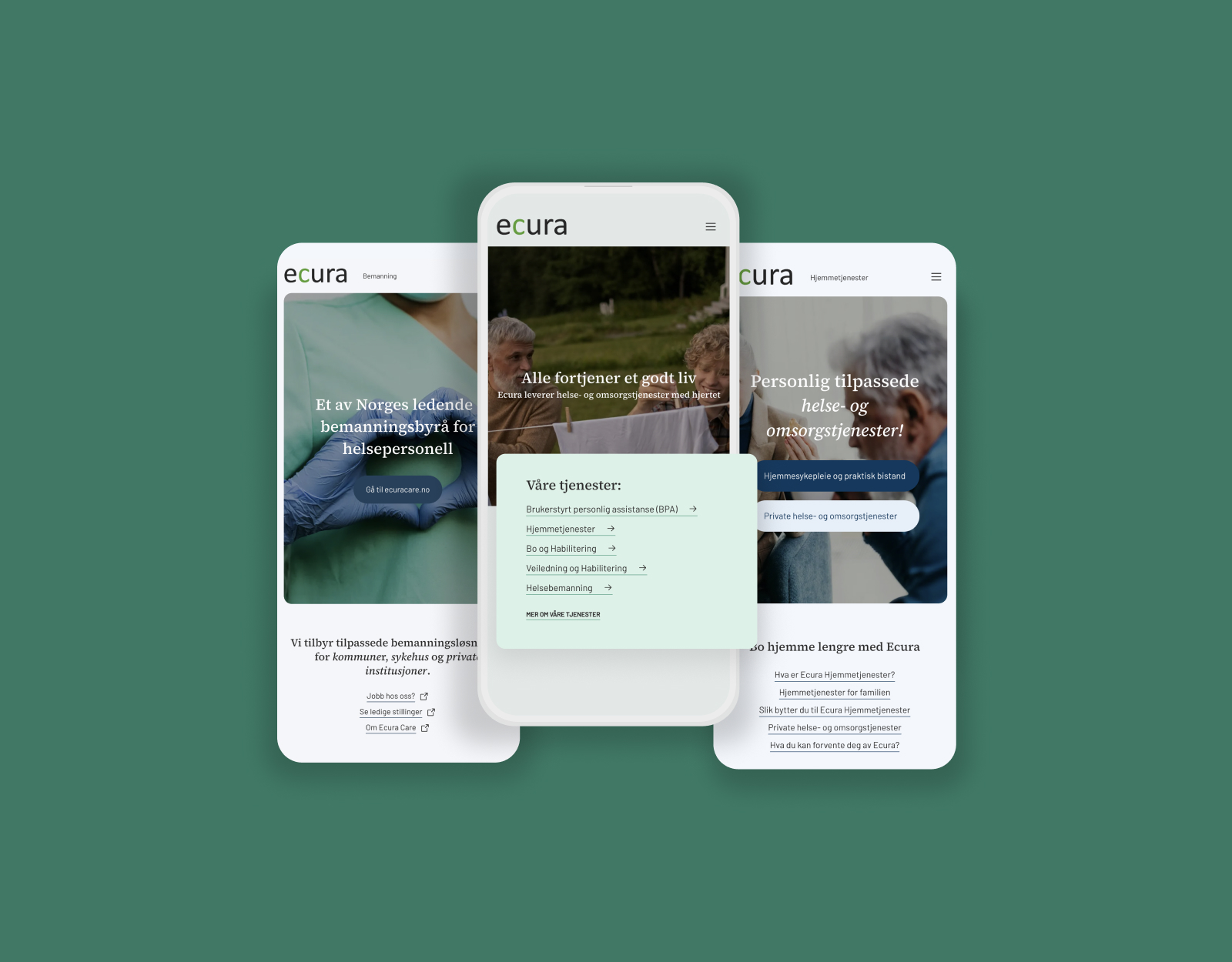
After several years of growth across various service areas, Ecura had multiple separate websites. To reduce complexity and facilitate further development, they consolidated their structure, technology, and content into one robust solution.
Ecura is one of Norway's largest providers of private health and care services to the public sector. They provide residential and habilitation services, personal assistance (BPA), home care, and healthcare staffing, with over 4,000 employees across the country. The company operates in a sector with high demands for quality, documentation, and regulatory compliance. Users, next of kin, and public clients expect clear information, good organization, and professionalism.
In such a context, the digital presence must quickly establish trust and appear organized and consistent across services and target audiences.
What we delivered
Technology
Visit website
Challenge: Growth without digital cohesion
The digital structure mirrored the organization's growth history:
- Four websites targeting partially overlapping audiences
- The websites were competing against each other for the same keywords
- Limited scalability in the technical solutions
The result was a structure that made it harder to consolidate visibility, further develop content for service areas, and create a cohesive digital experience.
Ecura wanted to strengthen its search visibility and gain a digital solution that could grow alongside the business. To reduce internal competition for search engine visibility and facilitate further development, the structure and technology were consolidated into one unified solution.
This is a situation many companies face when they grow through acquisitions or establish new service areas. Over time, separate solutions can begin to compete with each other for search engine visibility, and disparate structures and content can make it more difficult to create a cohesive experience.
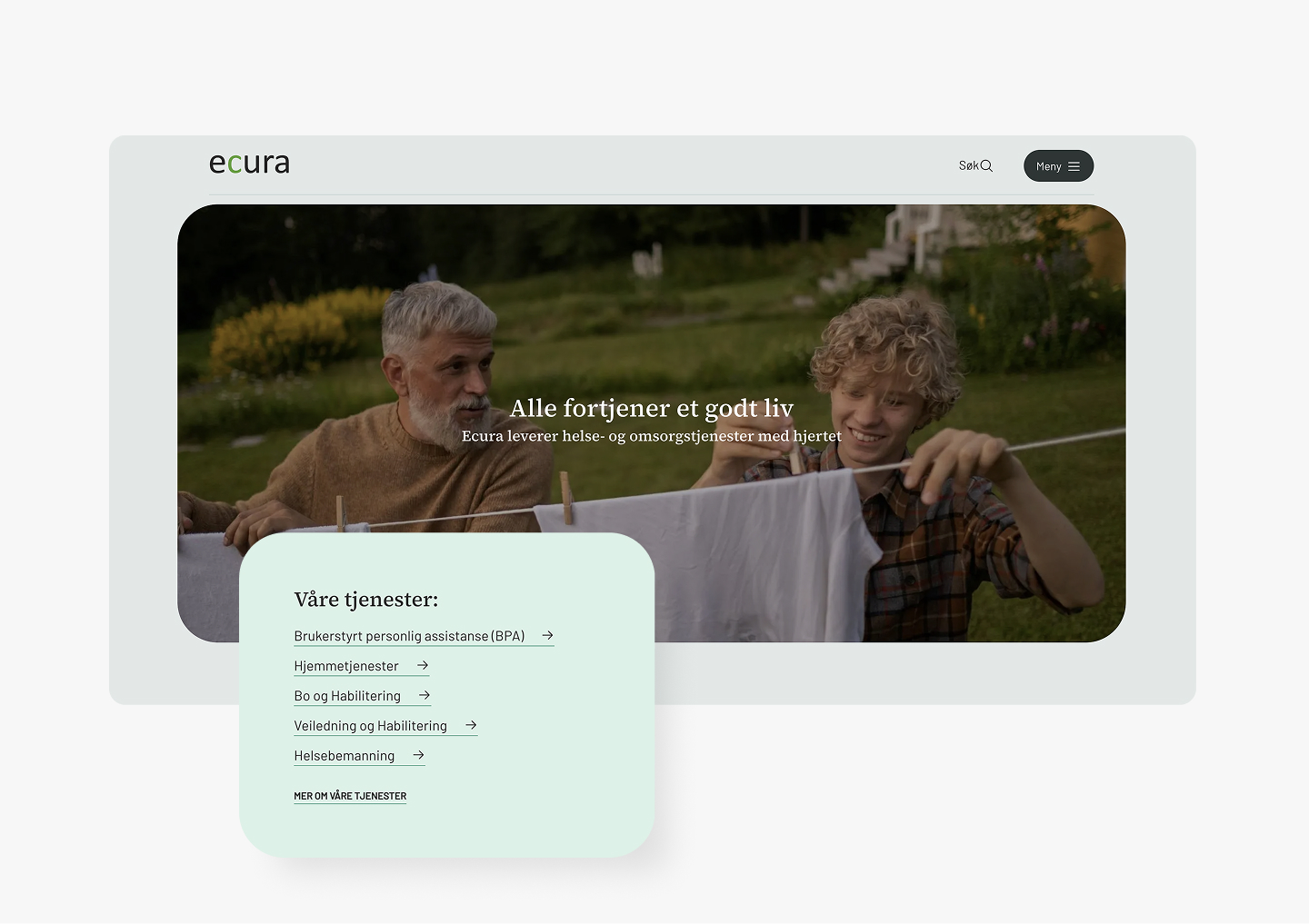
The solution: Structure before design
We started by understanding how structure, search, and target audiences were interconnected. The SEO analysis showed that Ecura's own websites were competing against each other for the same keywords. We then identified the target audiences and their needs, as well as the solution's most important tasks.
Three key measures were decided upon:
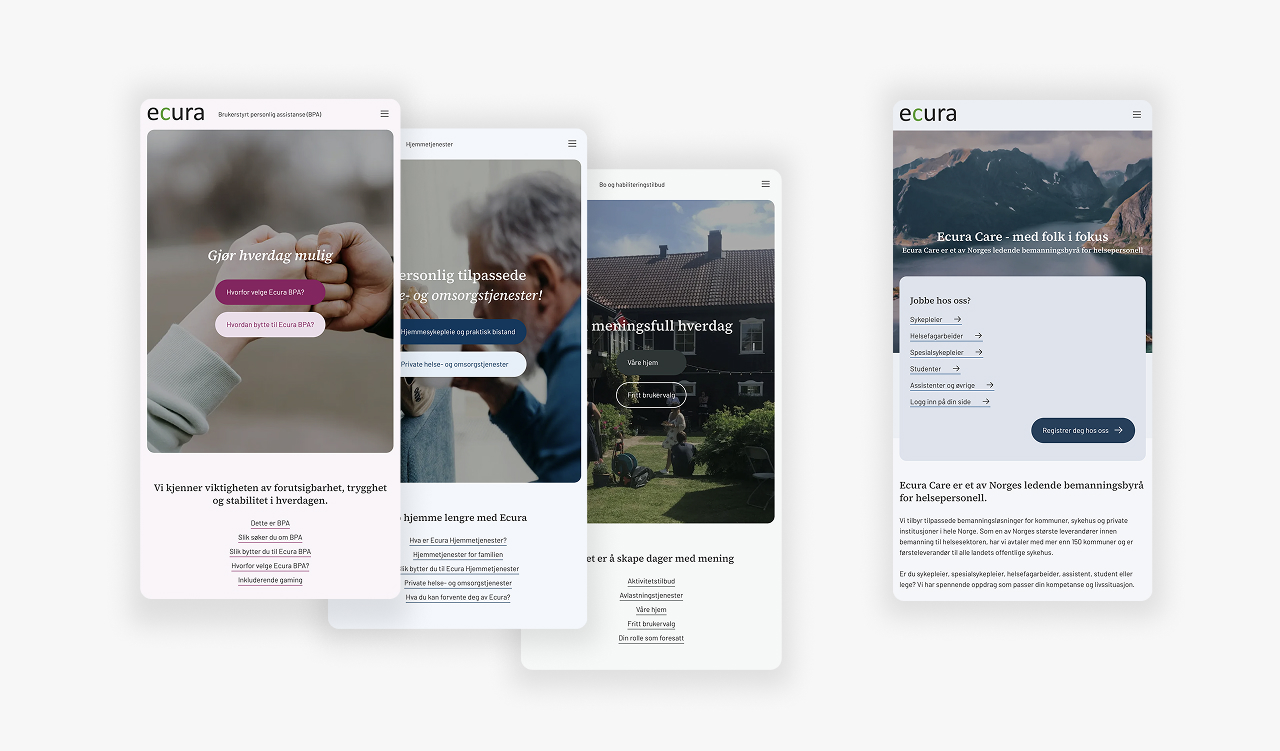
- Consolidate three of the service areas under one common structure at ecura.no
- Maintain the service area for healthcare staffing as a separate site at ecuracare.no
- Establish a common technical and editorial logic
By consolidating several service areas into one solution, Ecura's potential to rank well in search results was strengthened, while the architecture was set up for further growth.
Technology and architecture
The new solution was developed using React for the frontend and Umbraco CMS as the publishing platform, built on a headless system architecture. This means that the frontend (what the user sees) and the backend (the editorial tools) are decoupled and communicate via APIs. Content is managed in Umbraco, while the frontend can be further developed independently. This provides high flexibility and makes it possible to change both functionality and the user experience in the frontend without rebuilding the entire solution.
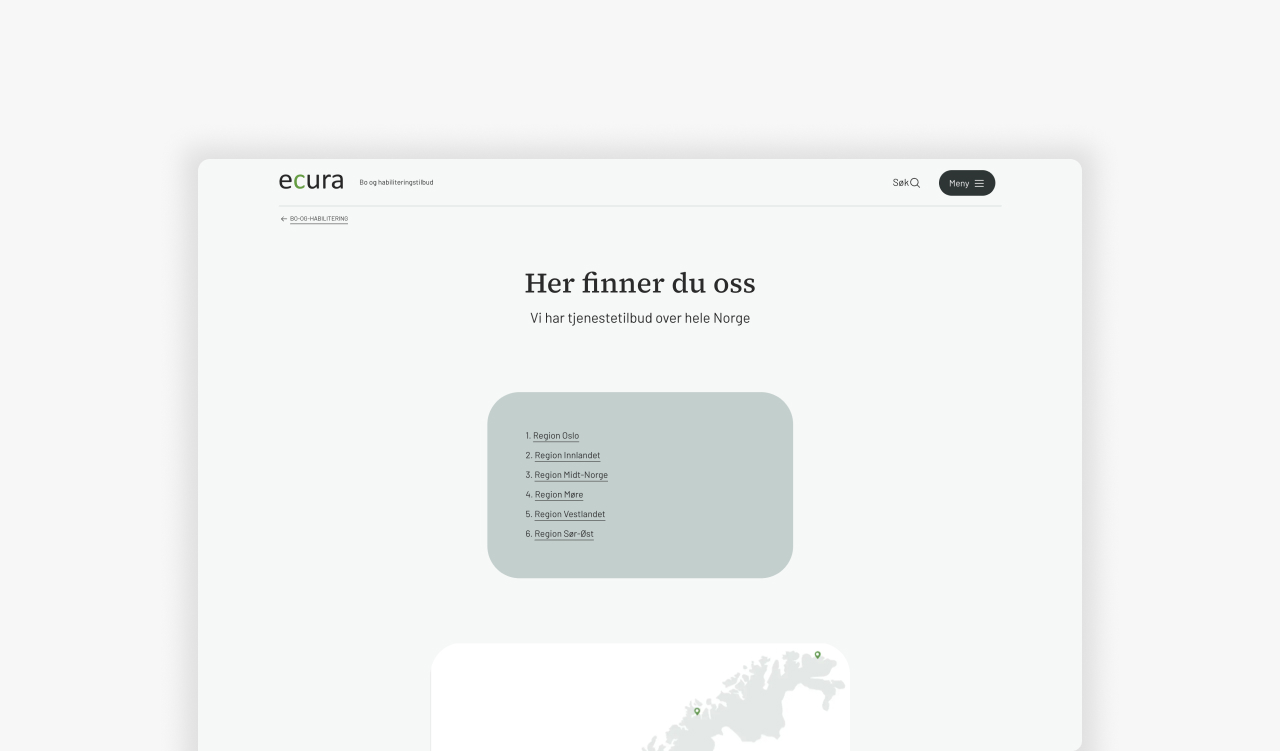
The architecture is also built to support multiple websites on the same technical platform. This is often referred to as a multi-site solution, meaning that ecura.no and ecuracare.no share the same CMS while maintaining their own domains, content, and customizations.
Umbraco was chosen to ensure:
- Clear role and access management per service area
- A scalable architecture that makes it easy to establish new service areas
- Excellent integration capabilities with Microsoft services
- Flexibility for future development
For Ecura, this means that different service areas can be developed further within the same solution, without each area needing its own technical platform. For organizations with multiple service areas or brands, this means that new websites can be established within the same architecture, with shared publishing logic and access management. This simplifies further development and reduces the need for new, separate systems as the business grows.
Content as a driver for the solution
Technology alone does not create value. To ensure the new solution worked in practice, we were brought in to assist with migration, preparation, and content implementation.
Together with Ecura, we reviewed all content on the existing websites and evaluated what was working, what could be removed, and what needed to be recreated. We handled the production of text and selection of images, and implemented a large portion of the content into the new solution.
By working closely with the content within the solution itself, we were able to demonstrate how the components can be used in practice. This provided Ecura with a clear template for future content work.
Among other things, we developed:
- Language guidelines
- New and revised texts for key service areas
- Photo brief and a defined visual style
- Practical templates for publishing content in the solution
The content work became an integral part of the implementation, giving Ecura a kickstart for their ongoing editorial work.
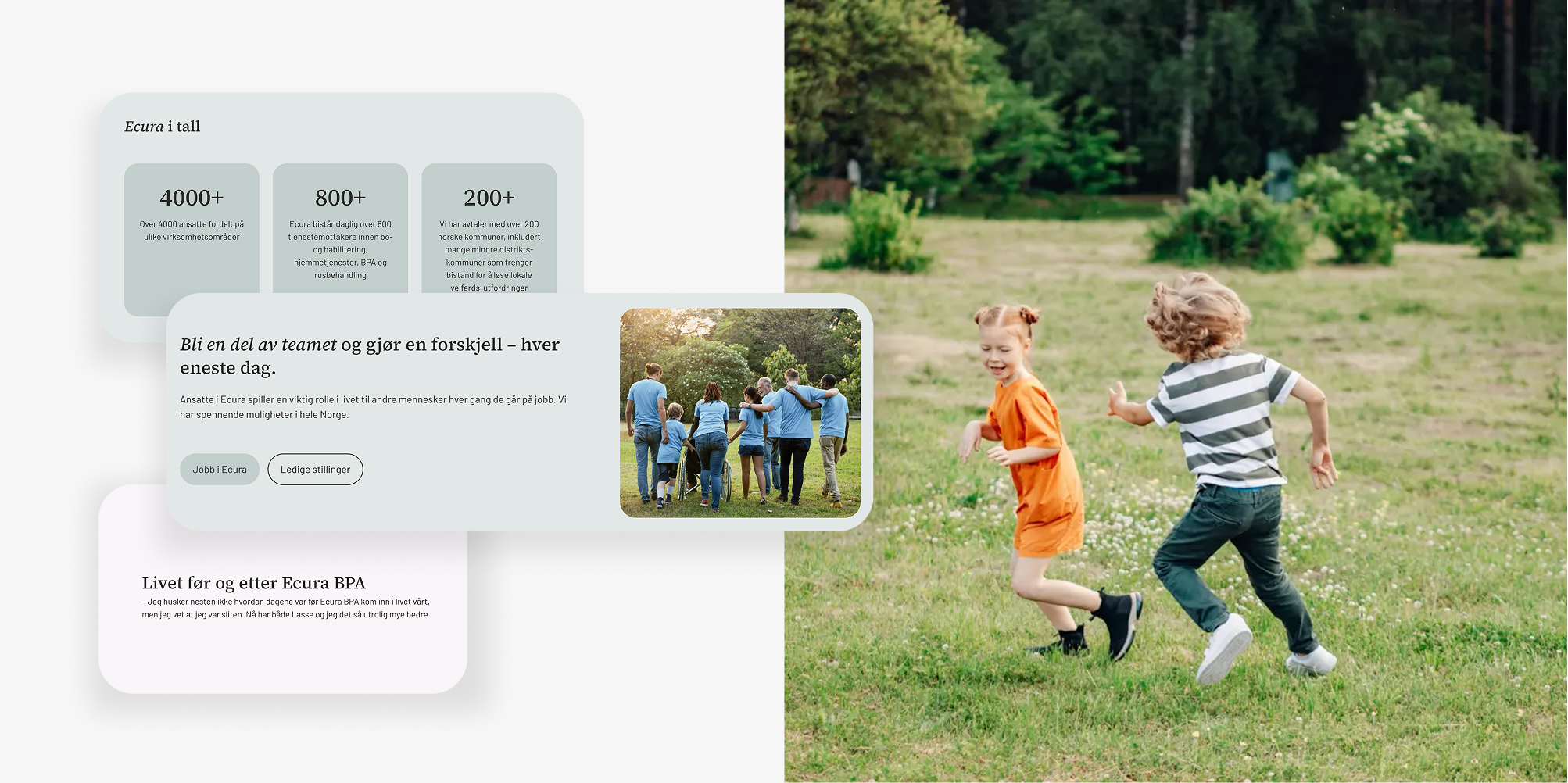
Result: A unified structure with room for further development
Ecura.no and ecuracare.no were launched in February 2026, and Ecura now has:
- A single digital gateway for three service areas
- Clear landing pages for each service area
- Reduced internal competition in search
- A unified look and feel for all service areas
- A publishing solution that provides control over all of Ecura's service areas
The structure makes it easy to establish landing pages for new service areas within the existing framework. This results in lower development costs and faster future development.
A solution for growing businesses
For growing businesses, it is easy to accumulate digital solutions that solve individual needs but create increasing complexity over time. The Ecura project demonstrates how thoughtful architecture, clear organization, and active use of content can consolidate multiple service areas into one solution. This is particularly relevant for organizations that have grown faster than their digital structure.
