Innovation-driven marketing: Stop doing what doesn't work, start with insight
How many marketing decisions have you made based on gut feeling over the last few months? Be honest. The answer is probably: more than you’d like to admit.
There is a quote that hits home every time I think about traditional marketing: "If dogs don't like your dog food, the packaging doesn't matter." Stephen Denny said it, and it sums up something very simple: If the product doesn't meet the fundamental need, it doesn't matter how good we are at communication.
Yet, communication and visibility are exactly what most people instinctively turn to when results are lacking. New messages. New ads. More spend. More of what isn't working.
Has marketing become too narrow?
When I first learned about marketing in the 90s, I learned about the four Ps: Product, Price, Place, Promotion. The marketing mix. In practice, the field, and the industry, has focused far too much on just one of them. Promotion. Messaging. Campaigns. Repetition. That isn't necessarily wrong. But it is insufficient.
Because what happens when the problem actually lies in the product, the price, the availability—or simply in the fact that the customer is uncertain and can't find the answers they need? Then it doesn't help to increase reach and frequency. Then we need a different approach.
What if we worked more like product developers?
In my experience, we work a bit differently in product development. More user-centric. More testing and experimentation. We guess less. It made me think: Why don't we work like that more in marketing?
Innovation methodology, and especially design thinking, is at its core about three things: empathy, ideation, and experimentation. Not as a rigid process, but as a mindset. An attitude toward how we solve problems.
And when we bring that mindset into marketing, we start asking questions beyond just "how do we communicate this better?" We start asking: Can we improve the entire experience on the user's terms?
Empathy is insight, not guesswork
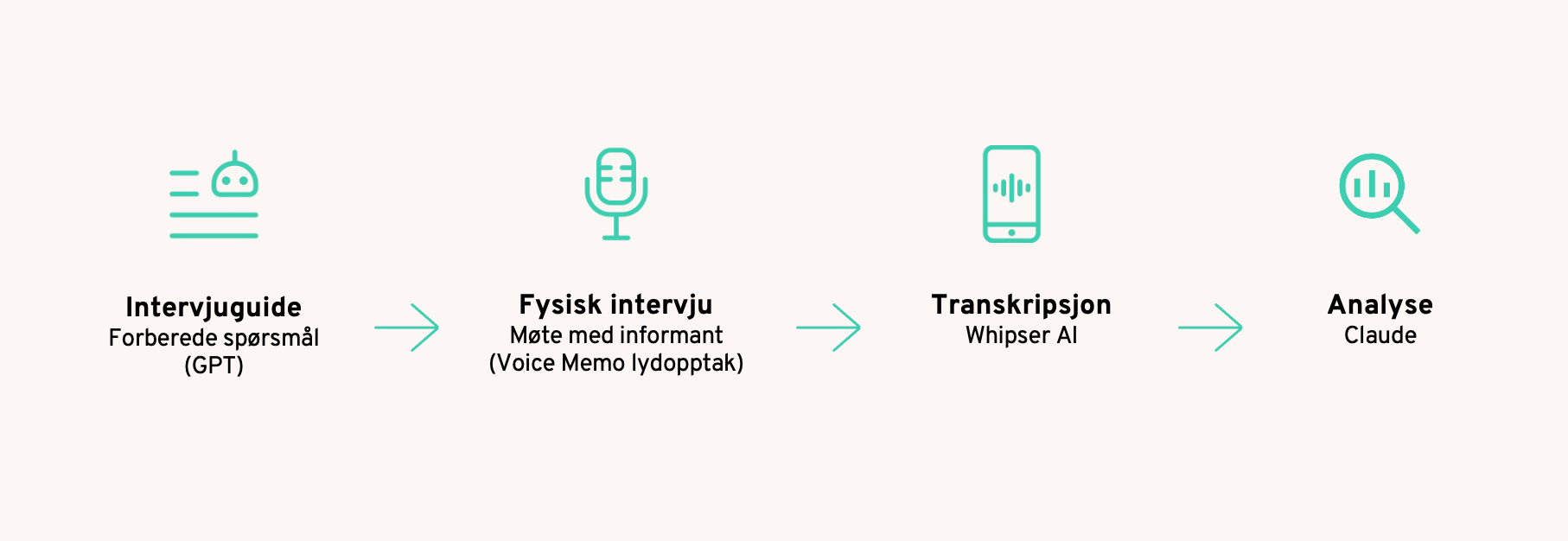
Empathy in marketing doesn't mean sitting in a meeting room discussing what customers might be thinking. It means actually asking them. Because yes, you should talk to your customers. Experience shows that five user interviews of about 45 minutes will uncover over 90 percent of the real problems with your product or service. It can be done in a single day. You can use AI to create an interview guide, record the conversations on your phone or laptop, transcribe the interviews with Whisper AI, and then upload everything into Claude or ChatGPT for analysis. Just like that, you have unique, firsthand knowledge of what is holding your customers back.
Insight is everywhere
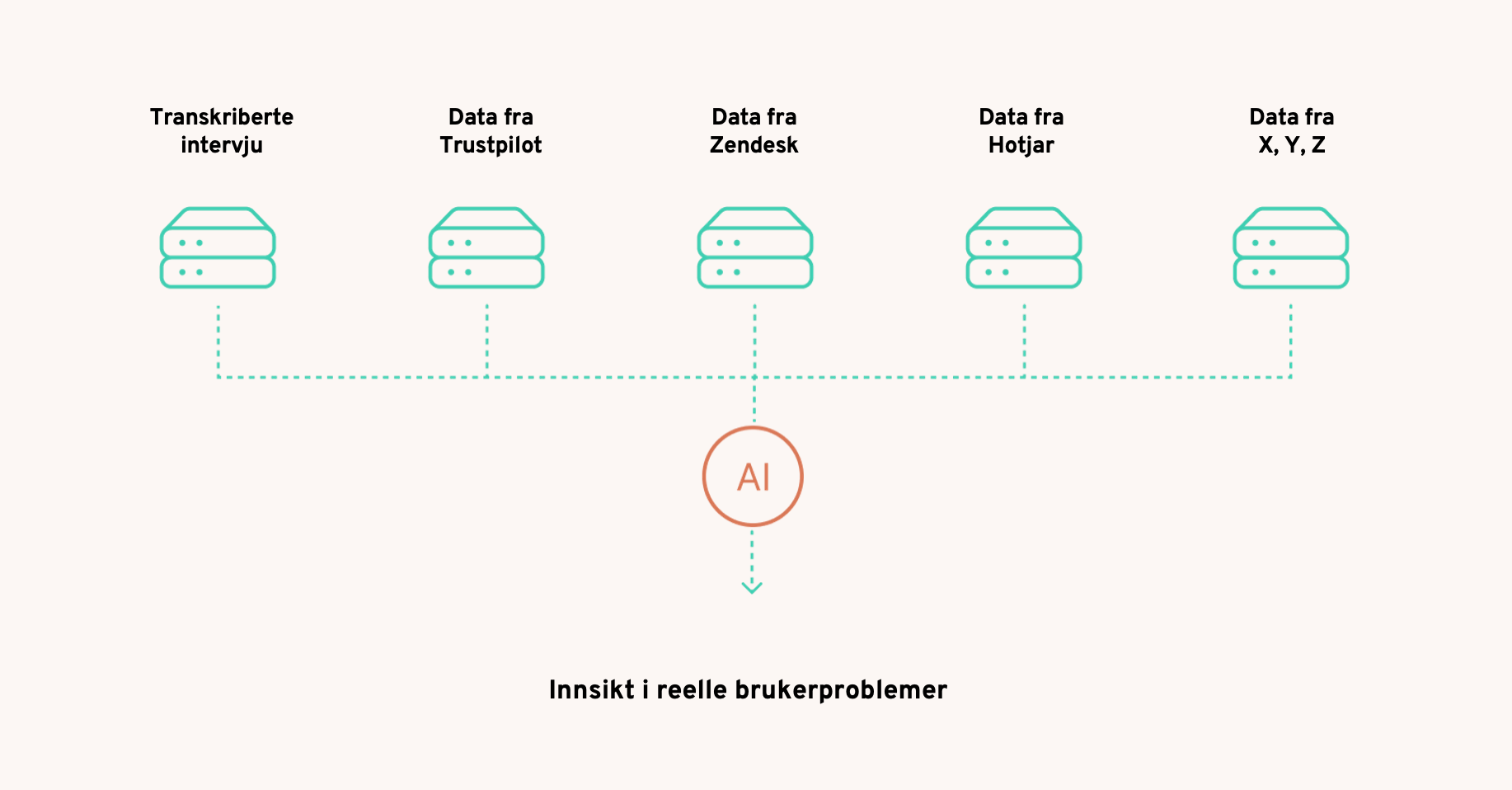
But user interviews are just one source of insight. There are many more, and in today's data- and AI-driven world, it is easier to find insights about your product or service than you might think. With AI, you can analyze the data in minutes, not days.
Customer comments from Trustpilot or Google Reviews contain invaluable information, and most of it can be exported or retrieved via APIs. Zendesk or other support systems give you direct insight into what customers are actually wondering about and struggling with. Behavioral data from Hotjar or Google Analytics shows you where people drop off and what they actually do when they visit you digitally. Search history on your own website is a goldmine; it shows you exactly what users are trying to find, in their own words. If you work in hospitality or travel, TripAdvisor provides access to large amounts of relevant feedback. Social media is full of honest opinions, if you know where to look.
AI is an expert at statistics
It is rarely a real obstacle anymore that data is difficult to extract. A few minutes with Claude (or equivalent) can often be enough to generate a simple script that retrieves what you need.
The point is this: There are enormous amounts of insight available, and with AI, you can analyze and distill all of this into concrete, solvable user problems in an extremely short time. What used to take an analyst several days now takes minutes.
It is rarely an ad that is missing
People don't stop in a potential buying journey because the ads are bad. They stop because they are uncertain. Because they can't find the answer to questions they have. Because the choice feels too difficult, because they don't understand the value, or because the value doesn't align with the price.
Often, these are not marketing problems in the traditional sense. They are user problems. And the solution is rarely about more visibility; it is about clearing up what is stopping people where they actually are in the process.
From insight to ideas, and to testing
With concrete user problems identified, the next step is ideation. Here, AI is an incredibly useful sparring partner. Not as an "answer machine," but as something that helps you think more broadly and generate more possible solutions than you would have on your own. But remember: AI is only the assistant. It is you, as the professional and advisor, who must decide what is actually worth testing.
Because marketing, like innovation, is not about hitting the mark perfectly the first time. It is about adjusting course along the way. Incremental improvements that gradually yield better results. The more ideas you generate and evaluate, the greater your chance of success.
Major changes, such as a new product page in your online store or a restructured checkout flow, can be user-tested with real people before you build them (it can be done in a day). Smaller adjustments can be tested live, and messaging can be A/B tested directly. You can't know which variant will win, and that's the point; you test your way to the answer.
Perfect is the enemy of good
Far too many marketing activities are never executed because they have to be perfect before they are published. Stop doing that. It is better to start with something that is 80 percent finished and learn from it than to never get started because you are waiting for the perfect solution. Faster learning is a competitive advantage. Those who learn the fastest win – even in marketing.
It’s not about doing more of what doesn’t work. It’s about insight into real user problems. More curiosity. More willingness to test and learn. That is innovation-driven marketing.
In summary: Five things to take with you
- Start with people, not with messaging. Understand what actually stops people from buying, not what you assume stops them.
- Be creative in where you source your insights. User interviews are obvious, but what about customer comments, support data, and behavioral data? The sources are many, and AI makes both data collection and analysis fast.
- Explore many solutions. Don't jump on the first idea. Use AI to think more broadly, and use your professional expertise to prioritize, select, and discard.
- Test. Let data determine what works, not gut feeling.
- Use AI to increase your pace. Not as a replacement for thinking, but as an accelerator. You are still the specialist!